

 Nederlands
 English
Boundless learning with FC-Sprint²
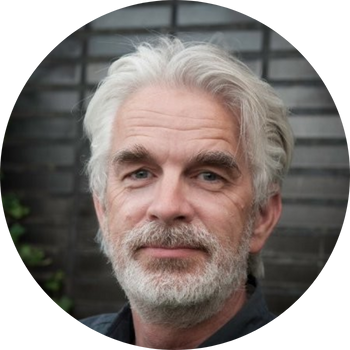
1. FC-Sprint² sounds sporty. Where does that name come from? And what does it say about how you think learning works?
The name FC-Sprint² originated during the very first experiments, long before DigLin+* existed. In that phase, high expectations and a rich array of resources were consciously used for the first time. What was striking was how quickly students progressed. This remarkable acceleration inspired one of the teachers to come up with the name Sprint², with ‘²’ being a nod to NT2. The letters FC referred to Friesland College, which is now called Firda.
That name fits well with my view of learning. Progress can and should be rapid. In fact, learning should proceed faster than a student expects in advance. That visible growth is crucial: when you notice that you are making progress, you remain motivated and dare to go for it.
*FC-Sprint² is the approach and DigLin+ is a digital learning environment and an elaboration of that approach for language acquisition.
Learning should proceed at a faster pace than you, as a student, anticipate. Otherwise, it becomes challenging to remain motivated.
2. You advocate giving students more responsibility. What happens in the classroom when you actually dare to give them that space?
It's not just about giving more responsibility. It's about giving responsibility on the way to a specific goal. The goal is formulated, but the route to it is not. So there is indeed room to achieve that goal in your own way. As a student, you are given the responsibility to fill in that space yourself. That's why we also build resources from which a student can choose. There is no fixed route, which means that choices are possible. In fact, you have to make choices. So it's not just about giving more responsibility. You also have to provide plenty of opportunities for effective learning.
If you give them that space, students can show their individuality in learning. And then they can learn to make choices in that learning. You can then discuss the choices if they do not lead to the achievement of the goal. This allows you to stimulate reflection on their own learning and significantly improve the learning itself. You create an environment in which the student can discover what works best for them.
When DigLin+ was still a European project, interviews were conducted with the students via interpreters. One of the illiterate students said that “listen and type” was a very tedious exercise, but that it was very important. I believe that insight arose because there were choices to be made on the way to a certain goal. And that almost involves a consideration to do “listen and type” even though the exercise is tedious.
I regularly attended Alfa classes for a number of years and saw that there was more ownership of the learning process and that, in one way or another, the work was being done with greater intensity. What's more, the students knew exactly what they were doing. I remember classes where students came in and got straight to work. I remember students themselves saying that they could read the words on a certain list well and fluently and asking the teacher to check. I also saw all kinds of useful strategies emerge to make the exercises as good and fluent as possible. And gradually, we saw students start to use each other's knowledge.
I now work with vocational students in the training company where DigLin+ was developed and is being expanded, and we see the same thing there. There, too, I see more ownership by students for their own learning and their own projects. And there, too, there is more interaction between students. In this context, it is important for teachers to be the ‘last resort’ and not to actively try to help. We do help, but only on request and if the knowledge is not already available from one of the other students or if other sources are available.
The goal is set, but the route to get there is not. It is precisely this space that makes learning more powerful.
3. In your approach, the student does the initial thinking. What do students themselves notice about this?
At first, students may feel somewhat uncomfortable. Many people are accustomed to a teacher determining what is best for them. However, especially in new situations—such as a new class or internship—this way of working is often accepted without much difficulty.
In literacy training, the ‘initial thinking process’ is particularly interesting. Traditionally, the sound-symbol connection is taught through explicit instruction by the teacher, in a fixed, linear sequence. This requires homogeneous groups and few new students joining mid-course. Moreover, this approach is difficult for students who do not yet speak the language and have little school experience. Computers offer a different approach. By working with images, sound, and direct feedback, students can ‘play’ with sounds and letters, as it were. I have seen that, without explicit instruction, they still mastered the sound-symbol connection.
4. The role of the teacher is changing from explainer to coach. How does this benefit teachers?
If students have resources and can work effectively on their language acquisition on the computer with images, sound, and immediate feedback, this also gives the teacher more space. First and foremost, this is space to observe. What do students do with the space they are given? How could their learning be improved? But it also gives them the space to help individual students where necessary.
5. This edition contains practical experiences from the past ten years. Which moment or result has stayed with you the most?
Can it be just one moment and one result? Together with Ineke van de Craats (in memoriam), I worked on the ‘bingo’ exercise, designed to train rapid word recognition. Our assessment was that it would be a high expectation for an Alpha student to complete this exercise in two minutes, with a few mistakes. That's what we communicated.
What happened? After a lot of practice, some students achieved one minute, without any mistakes. That then became the new standard. The effect was enormous: students continued to practice longer and many more people ultimately achieved that high goal.
One result was recognition in 2021, when, after extensive research, DigLin+ was included by the UNESCO Institute for Lifelong Learning in its database of effective practices for reading, writing, and arithmetic. That felt like the crowning glory of our work.
Read more about
DigLin+ and FC-Sprint²
Jan Deutekom is co-auteur van DigLin+, de digitale (alfabetiserings)methode naar B1. Het zal geen verrassing zijn dat DigLin+ is ontwikkeld volgens de uitgangspunten van FC-Sprint².
Werken met DigLin+ betekent dat cursisten actief leren: fouten maken en daarvan leren, verantwoordelijkheid nemen voor hun eigen leerproces en werken met bijna 7.500 rijke bronnen. Dat levert niet alleen eigenaarschap op, maar ook razendsnel resultaat. Lees hier meer over deze uiterst effectieve methode.
The 10 principles of FC-Sprint²
- Behavior is determined by the environment.
- Learning efficiency increases when students take responsibility.
- Learning is doing things you cannot (yet) do.
- You have to make mistakes in order to learn.
- Learning becomes more effective when students feel the need to learn something.
- Students will never perform better than what the teacher expects of them.
- The student does the initial thinking themselves.
- Talent does not exist.
- A student can learn anything until they prove otherwise.
- The student is addicted to learning efficiency. Motivation is the outcome of a process. Learning is a team sport.
